

Complex business systems rarely fail because a single feature is missing. They fail because each interface creates its own version of state. The web app stores one shape of the customer, the integration stores another, the analytics layer infers a third, and automation quietly invents a fourth.
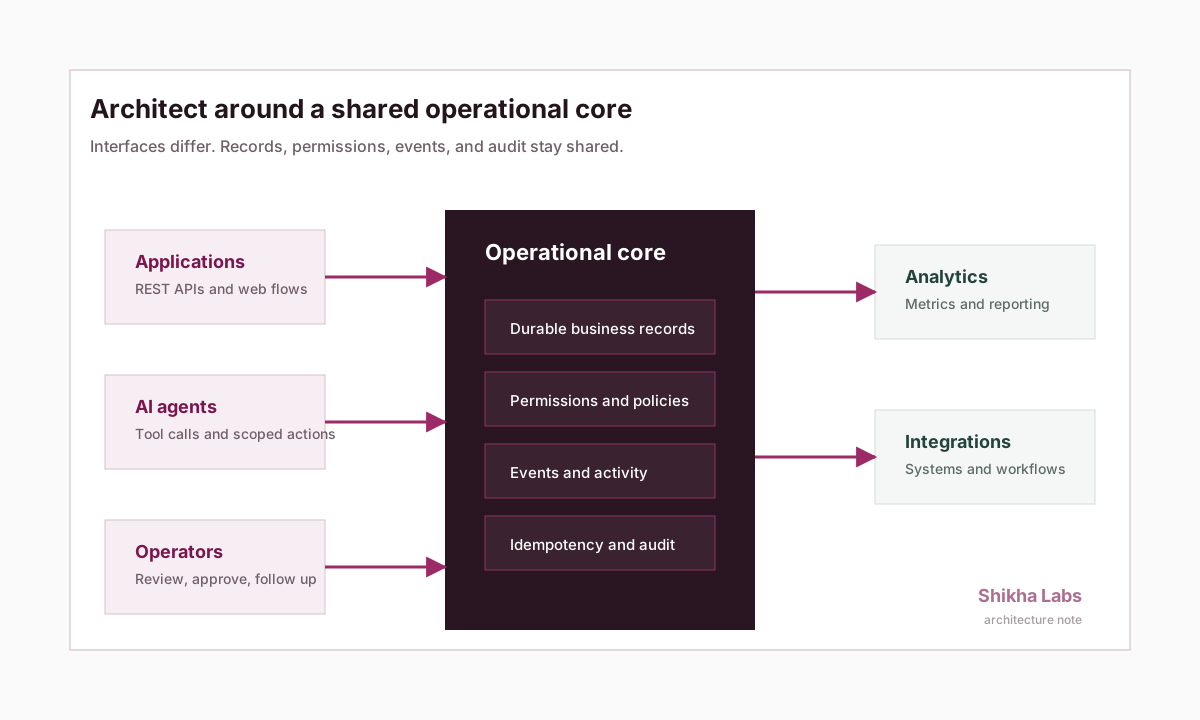
A more durable architecture starts with an operational core. The core is not only a database. It is the set of durable records, permissions, policies, events, and audit paths that describe how the business actually runs.
Applications can still have tailored interfaces. Agents can still use tool calls. Operators can still use review queues and dashboards. The important design choice is that those interfaces act against the same underlying records and rules.
This reduces drift. A lead created by a public form, a task created by an internal workflow, a support activity logged by an operator, and a summary generated by an agent should all be visible in the same operating context.
The operational core should own the concepts that need governance: customers, accounts, tickets, content, tasks, activities, permissions, lifecycle state, and request history. Peripheral systems can enrich or consume that context, but they should not become hidden systems of record by accident.
Analytics also becomes more trustworthy when it reads from the same operating context. Metrics should not only count events. They should connect to the records people use to make decisions and follow through.
The same principle applies to integrations. A partner system, website, data pipeline, or agent workflow should not bypass validation and ownership simply because it enters through a different interface.
A useful test for the architecture is simple: if a workflow changes business state, can a human find the record, understand who or what changed it, inspect the request context, and decide what should happen next?
When the answer is yes, the system is easier to support, extend, and automate. When the answer is no, complexity has usually escaped into side channels.