

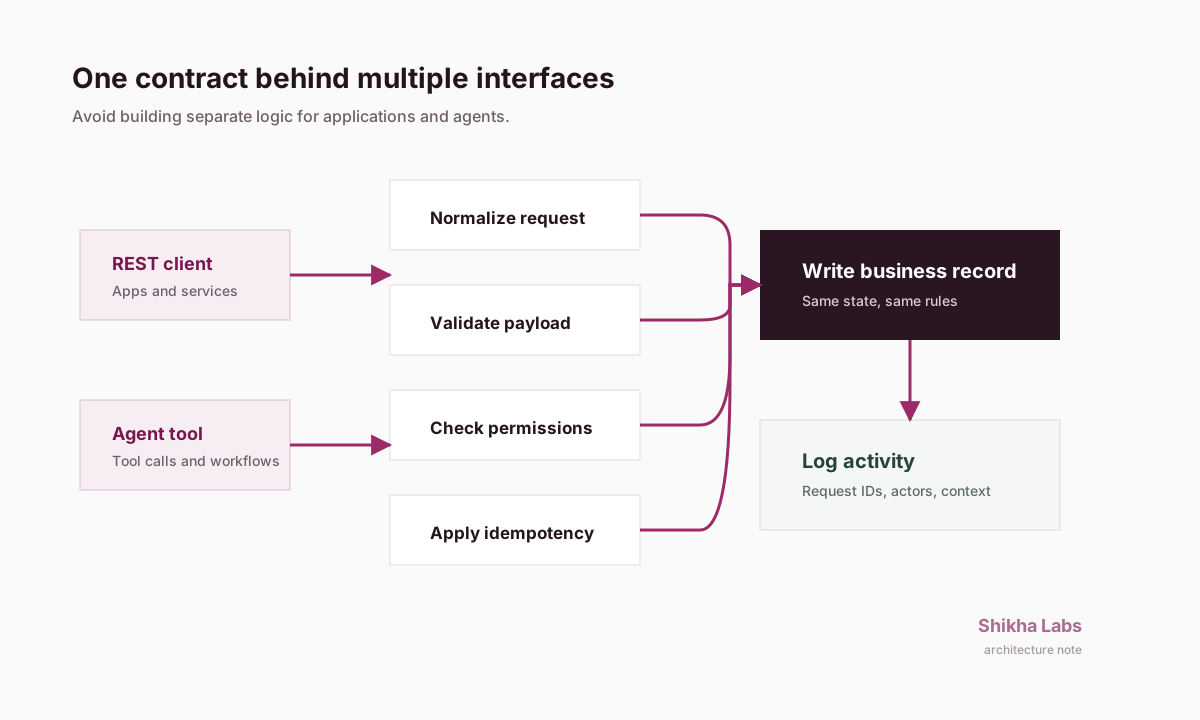
Complex systems often grow separate implementation paths for each interface. The web application has one validation path, public APIs have another, background jobs have another, and agent tools get a fourth because the use case feels new.
That separation creates risk. The same business action can behave differently depending on which client initiated it. One path validates required fields, another skips them. One path logs activity, another does not. One path checks permissions, another relies on a trusted service account.
A stronger architecture puts a shared contract behind the interfaces. REST clients, agent tools, admin screens, and automation jobs can have different entry points, but they should converge into the same request normalization, validation, permission, idempotency, write, and audit pipeline.
This does not mean every interface must expose every capability. It means the capabilities that are exposed should be implemented once as business operations, not repeatedly as interface-specific shortcuts.
Idempotency is especially important in this pattern. Applications retry requests, background jobs retry work, and agents may repeat tool calls after partial failure. A shared write contract gives every client a safer way to retry without creating duplicate business records.
Permissions should also be evaluated at the operation boundary. A user, service, or agent may enter through a different interface, but the resource and action still need a consistent authorization decision.
The audit trail should be shared as well. If a customer record changes, operators should not need to know whether the change came from a web form, an internal screen, a background integration, or an agent tool before they can inspect it.
This pattern makes future interfaces easier to add. A new workflow can reuse the same underlying operation instead of rebuilding policy from scratch.
The architectural goal is not uniform user experience. It is uniform business behavior. Different clients can feel different while still obeying the same contract.